
 Spotify

 Amazon Music

 Apple Podcasts

 iHeartRadio

 PlayerFM

 Podchaser

 YouTube
 RSS Feed
Jane Fonda’s Groundbreaking Role in Klute (1971)
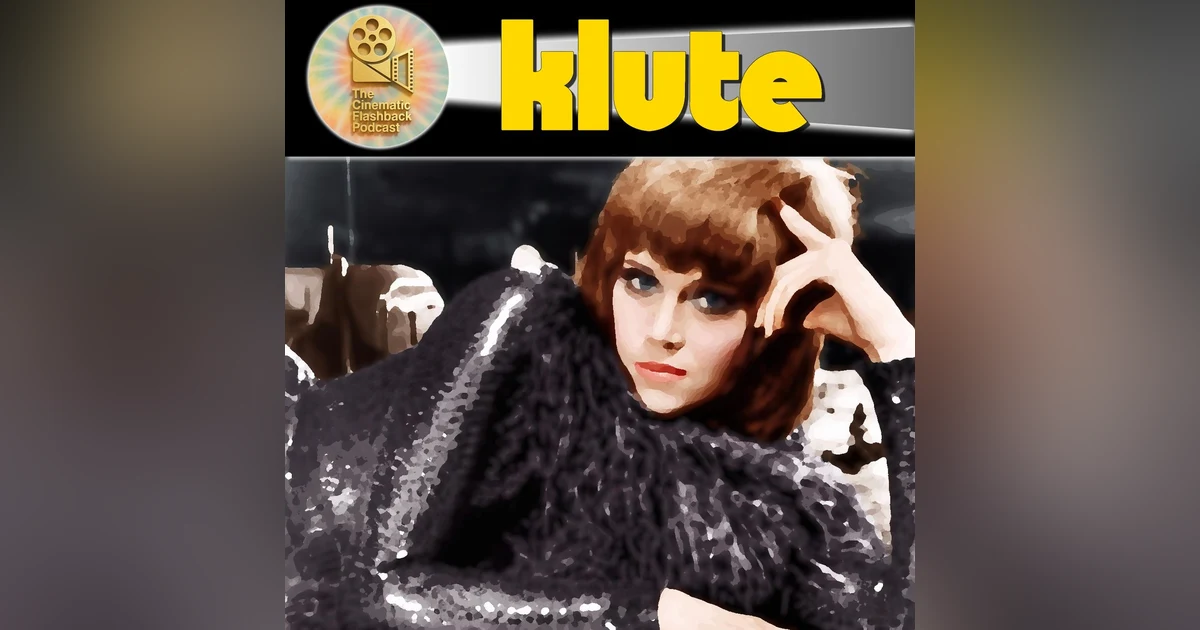
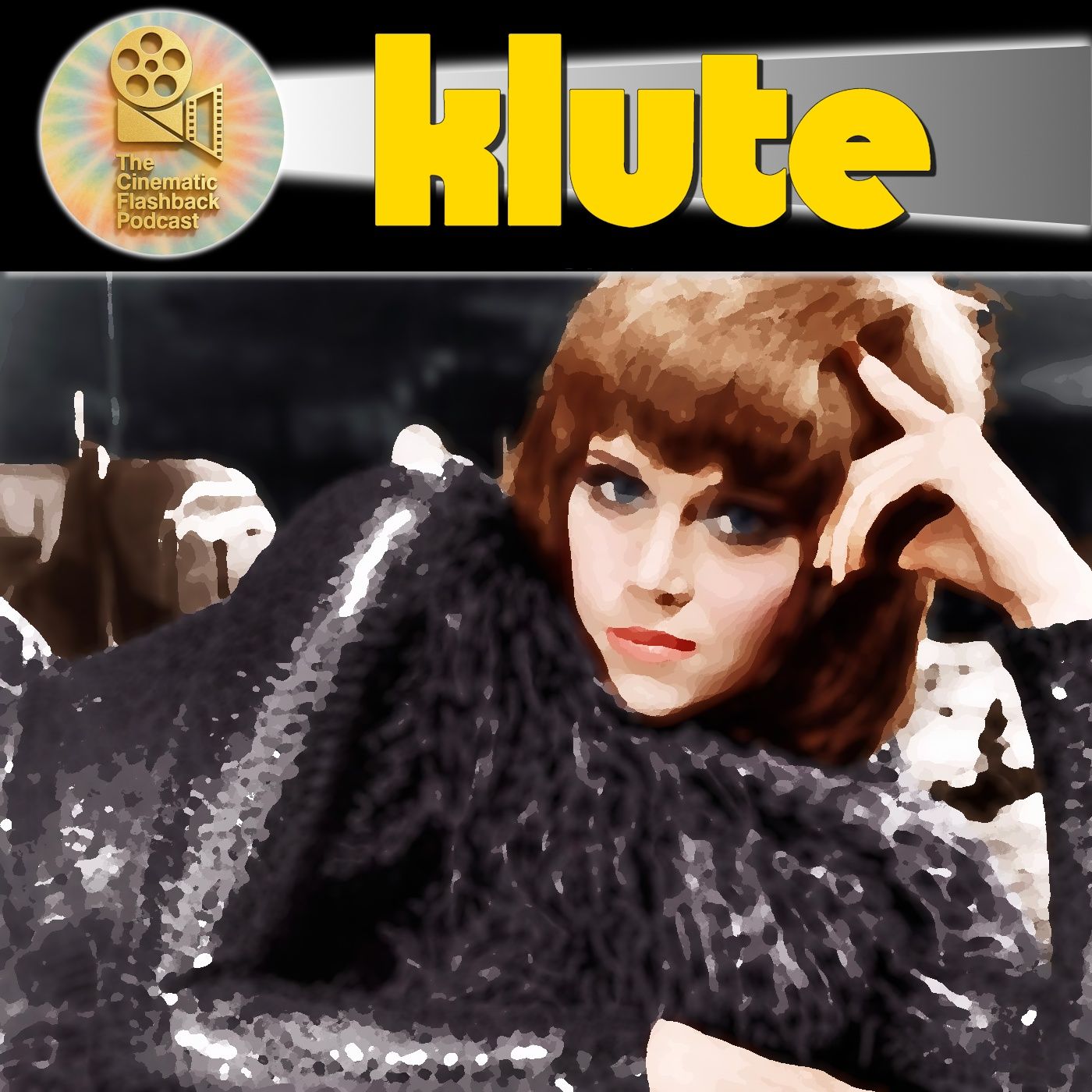
This week on the Cinematic Flashback Podcast, Chuck and Matt step into the shadowy streets of early-’70s New York to unpack Klute, Alan J. Pakula’s moody, character-driven thriller that helped redefine American cinema in the decade to come. Starring...
(00:00:00) Introduction to Paranoia in Film
(00:05:02) Exploring Clute: A Deep Dive
(00:11:56) Jane Fonda's Transformative Role
(00:18:06) Cinematography and Themes of Light and Shadow
(00:23:57) Character Dynamics and Relationships
(00:30:04) The Investigation Unfolds
(00:36:05) Clute's Ending and Its Implications
This week on the Cinematic Flashback Podcast, Chuck and Matt step into the shadowy streets of early-’70s New York to unpack Klute, Alan J. Pakula’s moody, character-driven thriller that helped redefine American cinema in the decade to come.
Starring Jane Fonda in her Academy Award–winning performance as Bree Daniels, a New York call girl navigating autonomy, fear, and self-definition, the film pairs her with a restrained, quietly empathetic turn from Donald Sutherland as private investigator John Klute. While the film bears his name, the heart of Klute belongs to Bree — her interior life, her contradictions, and the emotional cost of being constantly watched.
Chuck and Matt explore how Pakula uses surveillance, voyeurism, and silence to shape the story, aided by the striking cinematography of Gordon Willis, whose shadow-heavy visuals earned him the nickname “The Prince of Darkness.” Together, they discuss how Klute marks the beginning of Pakula’s unofficial “paranoia trilogy,” setting the stage for The Parallax View and All the President’s Men.
Along the way, the conversation dives into Jane Fonda’s career-defining pivot away from ’60s glamour roles, the cultural shift that allowed Hollywood to confront sex work without moralizing, and why the film’s investigation matters far less than the personal transformation at its core. The hosts also debate the film’s controversial ending and whether its quiet optimism feels earned—or intentionally unresolved.
Does Klute still groove more than fifty years later, or does it lose its beat? Grab a drink, step into the shadows, and join Chuck and Matt as they decide.
Links & Contact Website:
https://www.cinematicflashback.com
Contact Us:
https://www.cinematicflashback.com/contact/
Listen to Previous Episodes:
https://www.cinematicflashback.com/episodes/
Leave a Review:
https://www.cinematicflashback.com/reviews/new/
Read the Blog:
https://www.cinematicflashback.com/blog/
Subscribe:
https://www.cinematicflashback.com/follow/
Share the Show:
Tell your movie-loving friends!
Other Podcast You Might Enjoy:
- Surely You Can't Be Serious Podcast
- 30 Something Movie Podcast
- A Film By Podcast
- Dockingbay 77
- Def Dave's 1984
- Accidental Legends
- Phasers Set to Stun
- Children of the 80s
0:02 Would you like my friend Frankie? Not very much? Didn't he tell you what you wanted? Where can I find Arland's page? You're not going to find Arlan page. She's a junkie. Didn't he tell you that he sent me that guy? Dane McKenna sent you that guy? Well she's dead. Welcome to the Cinematic Flashback Podcast. Get ready to hop into the wayback machine as we journey through the wild, bold, and unforgettable films of the nineteen seventies. Each episode, we break down a classic movie or forgotten Jim by exploring the who's who of each film, diving into the premis and plot, seeing how it performed then and now, and wrapping things up by asking did it growth of the decades or did it lose its beat? Today we're reviewing Clute from nineteen seventy one, directed by Alan J. Kola and starring Jane Fonda and Donald Sutherland.
1:14 I'm your host. Chuck Branted, joining me as my co host Matt Sargent. Matt, how are you doing? I am well. I am well and happy to be back in the podcast chair. So last time we talked about the French connection. Well, I don't want to be that kind of person. But we talked about the French Connection too. Can I say that connection? Oh, that's okay. They're both great movies and we had a great time talking about them. If you haven't listened to that episode, go back and listen to it because the French Connection two. It's a cool transition from the French Connection to the French Connection two. Some of the same characters, but you get to spend a lot of time in Marseille and if you like to listen to French people talk French.
1:56 It's a great movie. We enjoyed it. I just like that it wasn't a retread beat per beat of the first movie, and so I think that was a great example of how you can make a sequel and not feel like you're just you know, retreading the same waters. This was really truly a sequel. It kind of continued the end of the story. It had a nice change in uh sort of tenor and tone, and the action was still there. There was a lot. It was good, and it was a very good movie in its own right. I think it wouldn't have been as good without seeing the French Connection first. But the French Connection was so popular that that was really not going to be an issue.
2:36 So I did enjoy that. But we're talking about Clute. Hey, one of the characteristics of the Cinematic Flashback was we didn't give spoiler warnings because we weren't going to spoil a film because ultimately we wanted people to go and see the film if they thought it was a good idea. However, that makes it really really difficult for us to talk about a film, you know what I mean. It does kind of put handcuffs on us. And also inadvertently, when you're talking to somebody like me who has a hard time shutting up, I'm going to give a spoiler by mistake. I mean when I tell people about a recent movie, and we have to be very very careful because I don't want to ruin it for them, you know.
3:23 And so I agree we need to find a solution for doing that. So during the recent holidays, I was listening to other podcasts that are out there that I haven't listened before, and I came across one that was actually reviewing Clute. They spent a portion at the beginning being completely spoiler free. So whatever they talked about during that segment there was not going to be a spoiler, and then they would transition into another segment where from here on out there possibly could be spoilers. And I think that that was a really good way to handle it, because if somebody wanted to just get enough information about whether or not they even wanted to see the film, they could they could pause and then come back later to finish it up.
4:12 Doing it that way is we can be very circumspect at the beginning and talk about general strokes and things like that and things that won't ruin the film. But there's certain times when we get into the details of what's happening in the film that that we might not be giving a spoiler, but you might be able to do what's going to happen through some of the details we give, and we don't want to feel bad. So at some point, what I'm assuming is you're going to say, from this point forward, there be beasts. Beware. I think that actually happened on the on Black Sunday, because it's like, Okay, Robert Shaws trying to get on the on the blimp, and well, I guess you can kind of figure out what happens from there, but we're not going to say it. It's like, oh, okay, apparently he survives. Yeah, I think that will be a good way to handle it.
4:58 I agree. Hey, I see you got something there in your hand. What are you holding? We got a review from Louisiana law Dude. It's the first review we're going to read on air, and we really want to express our appreciation for these reviews. Obviously we're going to cherry pick the very best of them, and Louisiana law Dude clearly has a mastery of the English language and he's able to express his feelings about the podcast so incredibly Well, let me read you his words quote. I believe the best podcast are those where the hosts clearly love the subject of the show, and Cinematic Flashback provides ample proof of that supposition. Chuck Is and his crew clearly love film and are deeply knowledgeable on the topic, So you know from the start you're in for a fun listening experience.
5:48 After binging four episodes today, I'm hooked. Awesome feedback, Right. You can just refer to me as the crew. Actually, you've had some guest host in sitting in my chair a couple of times, which I'm one hundred percent on board with Really, Chuck is the one that does all the work. He's the one that does all the production. So really, these kudos are really for you, Chuck. I'm just a happy, happy pal that gets to talk about movies with you. So so this is really a reflection on your you and your work, and we really are very thankful. Before we dive in, though, we're going to take a quick break, stick around. We'll be right Backree Daniels.
6:40 One man is missing, two girls lad dead, and somebody is on the other end of the phone. Don't be afraid, don't be afraid. Don't be afraid. Who is it, Daniels? Can I come in? Come in, Bree Daniels. Girl on the brink. Somewhere among her clientele is a freak who murders call girls, sit down, and a why incredible cop who insists her life is worth saving.
7:29 I don't think he's going to come back again. I just don't want to be alone right now. Don't be afraid, don't be afraid. What else do you remember about the man of Drupe? Nothing except that he wasn't kidding, That's all. But you cannot identify this man as Tom Grunneman. I can't identify him as any buddy, give. Me your hand. It's someone on the roof.
8:09 Did you like my friend Frankie? Not very much? Hey, their tapes, gollee Gee, just what I've always wanted thirty phone calls. Is mister goldfarg There. I've got to talk to somebody. I'm just a little way across town. Can I come over, Detective Trusk please? Hi, John Clute, he didn't take the plane. He canceled up. Well. I think this man killed Jane McKenna and killed Darland Paige. I think he drowned them. I think you should prepare yourself for the fact that possibly Tom is dead. But the only way I'm going to find out is to find him.
8:53 I find I'll notify the board as soon as I get to Chicago. Oh hello, don't be afraid, don't be afraid. Welcome back. Clute stars Jane Fonda as Bree Daniels, who is a New York call girl. She is connected to the disappearance of one Tom Grudeman by a series of letters.
9:43 Very risque and disturbing letters found in his desk. After the case has stalled, the family hired Tom's friend John Clute, played by Donald Sutherland to go to New York and investigate the disappearance and the fire. Clute was directed by Alan J. Pakula and is the first in his Paranoia trilogy, which includes nineteen seventy four's The Parallax View and nineteen seventy five All the President's Men. It was also the start of Pakula's collaboration with cinematographer Gordon Willis. The film was released on June twenty fifth, nineteen seventy one, by Warner Brothers. Plute is available on most major streaming services. On Rotten Tomatoes, it's certified fresh at ninety four percent from forty seven reviews, and the audience score is seventy nine percent with nearly five thousand ratings.
10:36 I actually think that those ratings are probably right. I could really see maybe how this film would really resound with critics, but maybe not as much with audiences. Yeah, I think that's a reasonable statement. We talked about this before we started taping. Is that the movie's named Clute, but really it should be named Bree Daniels because the entire movie is really about Brie Right and Jane Fonda turns in an Academy Award winning performance for portraying Brie. Brie is a very nuanced character. She is playing a call New York call girl who has worked at the very very highest levels and down into more of a casual call girling. Right.
11:21 Yeah, she has moved out of her Park Avenue apartment because she's not getting as much business anymore. But there's a reason for that. Sure. I just wanted to talk a little bit about Jane Fonda's trajectory because one of the interesting things is that Jane Fonda's career really started, really started with more of a cotton candy type of roles. She was in Barbarella and really she was eye candy in Barbarella. Oh yeah, I remember that movie. I've heard her referred to as an interstellar sex kitten, all glamour and zero gravity. But by the nineteen seventy she was shedding that skin fast. In nineteen seventy she did They Shoot Horses, Don't They, which showed glimmers of her depth. But it was Clute in nineteen seventy one that really marked the shift, earning her her first Oscar in nineteen seventy two, and she was quite young to win an Oscar in this role. I think it can be argued that it was the role itself and not one hundred percent her acting in the role, although it's hard to separate the two. It was a groundbreaking role.
12:29 But of course a lot of the reasons that you know, is that Persona as a feminist firebrand really started to launch in this role. You know, a lot of people have a lot to say about her activism or anti war crusade. Some people hold her in low regard because of some of the things she did. She went on in her career to turn in amazing performances, but she got her Academy Award for this role. By the way, she won the Academy Award for Best Actress playing Bree Daniels the same year Gene Hackman Best Actor for The French Connection, which strangely enough, we have reviewed on the Cinematic Flashback Files. Yes, I think we talked about Clute because we were talking about Gene Hackman having won the Academy Award, and I think I looked up and saw that Jane Bonda had won the award for Clute, and I thought it was kind of a funny name. I had never heard of the film, and I think at the time you said that you had heard of.
13:26 This, you know, it's funny. I was absolutely positive. I had seen the movie Clute before, and then when I watched it, I was like, I don't think I've ever seen this movie before. I think I totally mistook it for a different movie. So it was cool for me to sort of see this movie that I had never seen before, but I had kind of believed I had. So that was neat And it may happen to some of our listeners, and if it does happen, we'd love to hear from you in the form of a review. And if you're lucky and the review is as well written as Louisiana law dudes, we will read it on it. Nice, very nice, you know. I for some reason, I'm starting to suspect that maybe the film you're thinking of, because you're kind of thinking of it like some kind of hard boiled detective. I'm wondering if you're thinking of Elliott Gould in The Long Goodbye, which is Believe it or not, that's a Robert Altman film, the guy who directed Mash and mccab and Missus Miller and is coming up in season two for us.
14:27 That'd be great because I think I might have been thinking of that. I certainly was thinking of something more along the lines of like a Maltese falcon or some other DASHL Hammett type. That's what was coming to mind when it was gonna be a hard boiled detective. And honestly, in this movie, Clute is a good guy. He's in the situation where he's having to surveil people, which is never a comfortable position to be in, and in this movie that kind of works through the movie, and it's a part of the part of the trajectory of the movie. When you really get down to it, he's a good guy. He's a very good guy. I don't know what I was expecting from this movie. I read the description and I was kind of like, I really want to do this one or not, because I was actually very surprised for a movie that was probably filmed in nineteen seventy it released in seventy one, just about how direct it was. In talking about sex work Breed Daniels, she'd go to the John, She'd say, I know you only want to spend fifty bucks, so tell me what you want to do, and she goes, oh, that sounds very good. That's a great idea. I like, your mind, it's going to cost you one hundred dollars, and I'm like, wow, Hollywood was definitely loosening up.
15:40 Well, I think it's actually larger than that. I think all of American society was loosening up. Remember, we were coming out of the sixties and we're getting into what we would call the more mainstream seventies. But I think that was what I was kind of intimating before when I talked about this Academy Award, and to some extent to me, was given the Academy Award because she was portraying a character that had never ever been seen on screen before, a sex worker. I think that brought a lot of attention. Now, don't get me wrong, I'm not trying to short sell Jane fondas she would have been anybody and they could have ruined that. She absolutely played it exactly how it needed to be played. So for that reason, great, great job. But the added fact of a woman talking so openly about sex and sex work, and then there's a whole sort of introspection that happens when she's talking to her therapist that you get the sort of point of view of this woman in this particular situation and under these circumstances that you would normally get.
16:44 But it was very shocking for the time. I mean, remember I was ten years old. I didn't see this movie. It was no way going to see it at ten years old, right. I do remember my parents and my older brother, not somethly my older sister talking about it. So it's probably very remarkable, especially the fact that there was There wasn't a ton of nudity. There was a very small amount, but she was costumed in such a way to be quite alluring. Most of the time, did Hollywood have some kind of code that they would say, hey, we're not going to do this or do that. Yeah, they really did, and this was an interesting time. The Hollywood Production Code, or the Hayes Code was what was in effect basically all the way up until the late nineteen fifties. It didn't allow anything from lustful kissing or any kiss that lasted too long or was in an embrace that was too close for too long, and crime couldn't be shown as paying off.
17:43 Well, that would have ruled Clue out alone. Well, certainly the French connection true first French connection, right, but it started crumbling in the late nineteen fifties with films like Some Like It Hot, But then around nineteen sixty eight, the MPAA switched to a rating system, and with a rating system they could basically make the argument that, hey, no five year old, eight year old, ten year old is in this movie theater, so we can talk about adult themes. I think carnal Knowledge, the Last Tango in Paris. They are all pushing boundaries on desire and power, and clute was ahead here, one of the first to openly portray sex work without moralizing. Bree's not punished for being a sex worker, She's humanized. This movie plays a lot with the male gaze or that viurious camera ejectifying women, but contrast that with the female perspective. Breeze often shown as diminished or watched and cretiquing on how society boxes women in.
18:43 So from her perspective, we see what she says, we see how she acts, and then I think in the Psychiatrist, we see how she really really thinks. I think those are the truth, So you get that. But then this film, it felt like that you're always following her and in some cases you're participating in. The voyeurism, yeah, without a doubt. And there's a couple of particular points in the movie. Bria's in her apartment after she had met with a client, and she's of course doing domestic things, but the angle we're seeing is from above, like through a skylight, like we're we're peeping on her and watching her instead of just filming her moving around the room. There's sort of this this watching.
19:29 And then there's a scene where she's in the garment district with old mister Goldfarb. Glue. Yeah, we're laughing because because Archie Bunker's wife, Jean Stapleton, plays the part of mister Goldfarb's secretary, and it is hilarious. It's so funny because the minute she comes on, instantly you know who she is and you're like, oh, so that's that's what Edith did, was ol far and she had to get back home before Archie got home from the bar or the loading docks wherever you. Or you know. With mister Goldfarb, she has kind of a unique relationship. It's sort of based on sort of a fantasy playing out of fantasy. She doesn't actually sleep with him at all, She just talks with him and it has sim alurying things, and he seems to be actually a sweet old dude. But you see that Clute's in there and he's watching her because he believes she may have some information on what happened to this man that he's trying to locate. So we certainly see some of that creepy being, you know, in cahoots with Clute as he peeps on her, and it's uncomfortable. You want to look away. You're like, hey, dude, nothing's happening here that you need you need to film or record or listen to.
20:42 Let's talk about Donald Sutherland. This is after Mash, this is after Kelly's Heroes. I thought he was going to be somewhere in that area. What we got was a very subdued performance. It threw me off, how about you. I'm actually shocked that it was after Mash in Kelly's Heroes, because he comes off as being so I don't want to say unsure of himself, but just so quiet, you know. After playing both of those roles, I think it really shows what a great actor Donald Sutherland was. He is and remains one of my favorite actors of all time. He really had a lot of range, clearly. Honestly, I say this every podcast. Have you haven't seen Eye of the Needle. You gotta watch that movie. Unfortunately it came out in the eighties. We're not going to review it here.
21:28 Maybe some of the listeners will put in comments and request it, and we just it will be undeniable. Undeniable, do you get that? Fans put in your reviews, put in the request the Eye of the Needle with Donald Sutherland and it would be great. But no. Getting back to Clute, it is the name of the movie, but it's funny. He has a very small, I don't want to say diminished role, and it certainly is a role that is the thread throughout the whole film, right. Clute is there from the beginning to the end. Bree Daniels doesn't really appear until several scenes in, but she's then there through the end. So you know, it makes sense that it's named Clute, but it is not the Clute I was assuming him to be. I think we find the movie that he's originally a police officer and friend of the man who disappeared, and then he becomes a private investigator. So I think we're led to assume that he got frustrated with nothing happening about finding his friend, and so he quit the police force and got hired by the family to find the guy.
22:29 I want to mention something. Gordon willis the cinematographer for this film. This is the I think maybe this is the first film that he worked with Pacula. You know, he did Paralllex View, All the President's Men and several other films with Pacula. He is known as the King of Shadows. So if you think about every time when Brie is walking up and going into our apartment, there's always all these shadows. Sometimes when she's in focus, her face is hidden in shadows entered John Clute. They slightly start to change the lighting, whether it's Clute physically turning on a light or you're starting to see that there's more light in the apartment until the concluding scene of the film. Something that I found very interesting about Clute's character.
23:20 He represents this outside force that bri was not expecting and didn't want, but his character brought this light into her world. Yeah, one hundred percent agree, just real quick on that. Yeah, the cinematography, it's one of the parts of movies that I definitely do, Like I mean, you know, we've talked before that I'm not such a student on the music. I more of reacted to the music. And that's sort of the point of it sometimes, is that it's really exuding a reaction, you know, through doing this podcast and talking with you and being more critical about watching films. And that's why we encourage everyone that's listening to continue listening, because really opens up this whole new world of appreciation for the movies. And one of them is a cinematography. Really, you get to see how they play with the camera, how they're filming, how they're exposing the film to get the feeling that they're trying to get, and it's really amazing.
24:17 I totally agree with that. But let's talk about some of the other characters and the actors that played them. So Charles Chaffe played Peter Gable, and believe it or not, this was his first time acting on screen. This was his first big role. That's amazing. I thought he had been around forever. I think I've seen him in about a million things. Afterwards, yes, you've seen him in a million things, but this is this is his part. Now. Cable is the guy that kind of initiates hiring clute to go in and investigate after the FBI or the police. The case kind of goes cold for six months and then he's on it. One actor. When his name came up in the credits, I was like, yes, Roy Scheider plays Frank the Pimp.
25:03 Yes, Frank's not and Frank's a real slick character, you know, real he Schider did a great job. I mean, he really did a great job playing this kind of a swarmy right. You are so right on that, I'll be honest with you. When we saw him in what was the movie reviewed, Sorcerer, The Sorcerer. Yeah, Sorcerer. So good in that, so good in The Sorcerer again, another movie you got to see if you haven't seen it. Film like I can get behind Cloudy from French Connection, Yeah, Chief Brodie of course. Yeah, I forget his character's name in Sorcerer, but he Wow, what a film. Yeah yeah, And in this movie, I'm like, I feel like I gotta go take a shower to get because in.
25:52 Chief Brodie he's such a clean cut an American. You know apple Pie and you know Church on Sundays. Dude, this guy is about one hundred and eighty degrees from that and it's totally believable. And he's a good looking guy, so there's there's part of that, you know, and he sort of treats you know. It's a good counterpoint in this movie because you have Bree Daniel sort of representing this awakening of women and women's liberation and empowerment, and then you have this guy who's one hundred percent throwback. He represents all the bad things. Great line in this film is when Brees says, pimps don't get you the dates, they just take the money. So Alan J. Pacula we mentioned that he directed The Parallax View and All the President's Men, but he also produced To Kill a Mockingbird and was responsible for getting Harper Lee's blessing for Gregory Peck, whom we last discussed in The Omen with Jeff Panano last October.
26:47 Nice, I can't imagine that movie without Gregory Peck. Yeah, I cannot imagine The Omen without Gregory Peck either. I can't imagine To Kill a Mockingbird without without Gregory Peck. I was teasing you because I know how much you hate it. Him and The Omen. Yeah, he was not great. He was the wrong actor for that role. Rabatas be darned. But anyway, it's awesome. We have both of these films on our schedule, so Parallax View and All the President's Ben, which is great because I know I have seen All the Presidents Ben, but I don't think I've seen the Parallax View. I'll look forward to that, just to. Let you know, each one of these films tap into that paranoia feeling that was happening in America, starting with the assassination of JFK and going all the way through Watergate.
27:35 Oh the things that you've always imagined were happening, Well, here's an example of where it's actually happened. Thank god it stopped with that. So well, we already talked about Gordon Willis a bit, and you title him the Prince of Darkness, So we're talking about what jumped out about his cinematography here. We talked a little bit about the shadows and the framing and the way he isolates characters. I think all of those are part and parcel, and I think we'll probably see more of that in The Parallax View and in All the Presidents. Man. We need to take another commercial break, but coming after that, we're gonna leave the spoiler free zone and we're gonna talk more about the film. Preeclute all of that. We'll be back in just a moment.
28:20 All right, dearly beloved, we are gathered here today to celebrate Death Dates nineteen eighty four, a brand new show that will take you through the greatest pop culture year we have ever seen from movies, music, sports, toys. Television, and more. The show will be a chronological journey through every aspect of the year. So Who's gonna drive you home? And not let the glory days pass you by? Death Dates nineteen eighty four. It's a hard habit to break, but time after time I'll show you why nineteen eighty four was the best year ever. So who are you gonna call? Coming in twenty twenty six? Subscribe and follow now I'll be. Back and welcome back. So we're now into the spoilery section, if you will, because we're going to now kind of move from talking about characters and we're going to start talking more about the investigation. So the film starts. I don't know if you noticed this, but the film starts with this smash cut, which was very effective. So they're all at like the Thanksgiving table, and so there's Tom Gruneman said. The camera's kind of panning down the table and you see Clute, and then next to them you see Peter Cable, and then it ends up on his wife and then boom smash cut and it's showing Tom Gruneman's chair and it's at night and it's empty, and you know something has happened. Six months go by and the case is cold and the family and Peter Cable have now hired Clute to do the investigationist as we
29:51 talked about earlier, So let's talk about this investigation so bit. Before we start on the actual investigation, we also want to talk a little bit about why you think and it kind of begs the question a little bit at the beginning of why he's doing the investigation, which is one of the interesting parts of this movie. In the beginning, you think he's doing the investigation because he's the probably the only policeman they know, right, But it turns out later in the story that we find out that it's he's probably doing the investigation because the actual bad guy wants to have his finger on the pulse of the investigation. But it's interesting at the beginning. I totally was like, Oh, he was a policeman. He gives up being a policeman to be in a private investigator. It's actually not a trajectory that we don't see often that the policeman, if they don't get their detective badge or they're in a small town, they might go to being a PI. And then he's doing this investigation into Tom Gruneman's disappearance. I think there's more to him getting hired than just that.
30:52 That sort of became clear as we watch the movie. Here's how I interpreted Plute and Gruneman were friends. Yes, they had grown up together, right. Yeah, and Clute left the force and never done a missing persons before. He has no idea. I think Peter Cable just can't say don't do that. But you know he does have some control because you see that throughout the film. Clute goes back and reports progress to Cable. So I guess they're all friends, right, they know each other well. I think Cable was paying the bills obviously. Yeah, the company that Cable and Gruneman worked for were obviously paying for it. Because at one point Clut wants to buy an address book with names and all that, and he just needs five hundred dollars and so Cable was supposed to go off get that approved. So yeah, you're right, he was being financed by there.
31:39 Yeah, but that was also part of towards the end when Clute has some ideas and he's laying a trap by reporting to Cable, which was very cool, he. Tells him I know who's done it, because like at this point he knows it's Cable, right, and he's telling him like, hey, look, I think that Tom is dead, but I think I can close this case to night. I just I think I know the guy that beat Brion and so that's the guy and it's not not Tom. And at that point, Cable's like. Before the film begins, Cable has had a prostitute in his hotel. He ends up killing her. Tom walks in, doesn't say anything, but Cable knows at some point he's going to use it over me, so he's got off Tom before it actually happens, which I'll say my biggest complaint about the film was that Pakula didn't do much in terms of trying to hide who the individual was.
32:38 You kind of figure it out right about at the hour mark. This is a two hour film, so right about the one hour mark. Yeah, you start to figure it out. Yeah, I agree. I think we talked about this before. It would have been I think the superior film to be left in question, to have maybe more alternatives. Frank would have been a good candidate to be the bad guy on this particular case, right because he's got to in the middle of it and working that to the end would have been a lot more exciting. And I would also say that the final scenes, not the final final scene, but the final scene of action where Cable is chasing Bri and with Bri and going to Killbri and Clute is working to get there, that was sort of a it's a little bit disjoined in my opinion. It should have been sort of almost You could have had cut screens, you know, where Clut was solving problems and running across the streets and cables in the garment building, chasing Bri or you know, getting ready to hurt her, and it wasn't. It was like a conversation going on here where we had no sense of time on what Clute was doing. You knew he was working to trying to figure out where Brie was.
33:43 He needed to know where she was, and he had to go through several wickets to do that, but it wasn't exciting to me. So here's the funny thing, though, And I kept thinking about you watching this film, if you noticed. At one point, Clute says to Bri, Hey, look, I'm really worried about you. I just need you know wherever you go out. Please be sure to give me your phone number so I know where to contact you at. And then later Bree is at her psychiatrist's office, who is now left for the day, and so Brie says, I'm going over to Goldfarbes. Here's his number or something like that. Call me over there as soon as the doctor gets in, and it's just like, ah, these nineteen seventies problems where it's like if you only had a cell phone.
34:23 I'm telling you it was exactly like that. To arrange to meet up on Friday. You know, you were making plans on Thursday or the last thing you said to somebody on Thursday at you know, Friday after school was the was the plan? Right? And Bill, you actually laid eyes on each other or called your their mom's phone from your mom's phone. So we were very lucky as growing up, we had a kid's only line. My mom and dad bought another phone line because they were sick of answering the phone for all our friends because we had I had five brothers and sisters right so and four sisters, so there's the phone was on all the time. So mom and dad bought another phone line and we would use that. That was kind of the kids line, and it was nice, but that was how you kept in touch with and nobody even I mean, honestly, I remember when some people started to get beepers because that was the only technology to get to try to and you'd get a beep in school and you go to the payphone at school and call another payphone at school. And it wasn't for drug deals. It was actually for communications. Well, there used to be a thing. It's called an answering service. Oh yeah, you had a number and you would call that answering service and you'd say, hey, I'm Att sergeant. If anybody calls for me, tell them I'm at such and such, And everybody had your answering service number and you would call that answering service. Now this was for rich people, certainly.
35:44 Something in New York. You know, the club owner would own or something like that. But it was a thing that you would call and leave a message with some company, and then when people called in, they'd go, oh, I have a message for you, mister sergeant. In the investigation, there was one other thing that I thought was stupid. Yeah, what's that? Okay. Clute is talking to Trask, the agent, and he says, hey, let's let's investigate all of his close friends. And then the thing that was linking Tom to Bree were all these you know, spicy letters that he was sending to her that he was typing out. And then Trass comes back and he says, hey, look, I've compared all of these typed letters. So here's here's the letter that was sent to Brie, and then here's a letter that Bruneman sent to his wife. You can tell that there are different styles. Oh, and here's another one. It includes like, oh, that's that's mine. Well he said, inspect everybody. And then last he pulls up one and that The main characteristic is that the person typing he switches the T and the H and the word the They zoom in on it and they're like, this is Peter Cable's xample. It seems like that that would have been the first thing that Trask would have done six months ago to figure out this mystery, and we wouldn't have a movie.
36:56 I thought it was actually funny for me because I typed hte all the time. But now you don't see it because the computer just corrects and go you meant the. I don't know if you remember that movie The Incredibles where the villain talks about monologuing. So Peter Cable has this massive monologue that he's doing at the end, he gets off on it and then he's he's playing a tape where he has killed one of the characters from earlier in the film, and Brie is listening to it. She is just shutting down and she knows that she's about to be killed, probably much like her friend. And this is where Clute comes in. And Peter looks up, sees Clute and then he backs out of the window. Yeah, that was weird, and that's that's the end. So the point of the movie Clute is obviously not the investigation.
37:42 It's really more of Clute being injected into Breeze life and how that totally changed. So you think it was metaphorical that he backed out the window, that it was like good triumphed over evil, or was it this he actually got thrown out the wind but they didn't show it because they didn't want to show Clute being a brute, or maybe. Where that happen was so bad that this is the only thing that they had. Yeah, it could be. We never know what it probably have to get. The cinematographer's take on is like, well it worked out better without us showing Clute trying to push this very large dude through the window. But yeah, no, I agree with that and the other thing, you know, I'll probably take exception to and people maybe maybe the listeners will be have a problem with this. But the whole ending where Bree's talking about how much she doesn't think she could live with someone who's a good person.
38:33 This is part of her recordings is that she doesn't. She's talking about how she feels about this clute guy and how she has feelings for him that she's never had before, and how she thinks that's never going to work for her because she's just her penchant is to just blow that up, to destroy that relationship, and you know, not have to get back to her security of being numb, and we see at the end that she's packing up her apartment, leaving, presumably with Clute. He's the one that carries the bag for her and stuff. So it's a little bit of a storybook ending for kind of a mess up person. The whole story of Brie is that the entire time, we see what she's doing and we see what her actions are, but in the psychiatrist's office we get all of her inner monologues, her thoughts. So, in other words, she hates being a prostitute, she hates doing the tricks.
39:30 She would much rather be an actress, but she's not as good as an actress, but she's an amazing actress when she's a prostitute. So there's this. Whole you know, what she wants to do doesn't match with the actions that we see until the very end. Right then, what she's saying to the psychiatrist she's not sure how this is all going to work out, and that she might even be back by next Monday. And then again there's a smash cut and the apartment is completely empty. The phone rings one last time, because that's the motif of the phone. John's are calling her house and she says, no, I'm not going to be here, I'm kind of leaving New York, and then Flute picks up the cat walk out the door. Yeah, is it a storybook ending? It was a little bit, yeah, But I think it was maybe the beginning of will she stay in Tuscarora or will she be back?
40:25 You know? I mean I don't. We can all hope she will, and certainly she seemed directed enough. It would be hard to get away from her past, but one would hope that she could do it. Well, we'll have to wait for Clute too. I thought the ending was interesting. I really liked the overlaying of the psychologists, which I typically don't like, but in this case it was handled really, really well because they did small vignettes that were salient to the story. The scenes with the psychiatrist were all filmed last year, and what Pakula did in order to get this out of her was she and the actress playing the psychiatrist. They were just ad libbing a lot until they got the real raw emotion of what she was going for.
41:09 What was that called method acting? Oh, she was very much method acting because because since the apartment was kind of a character in and of itself. She actually wanted to live in that apartment for three days prior to anyone coming in, and so she was the one who kind of set it up. And yeah, I think that works. I think that works. It was a cool little apartment. Actually, yeah, I thought. I mean when they when they when she was, when she was in it, it looked really kind of like eh. But when they moved out, I was like, Wow, this is a really nice New York City. But it'd probably go for you know, five thousand a month nowadays. I think I think the little hovel that Clute was living in down below the bottom of the Brownstone, that would go for crazy Matt. The time has come. Did Clute grew for you? Or did it lose its beat?
41:56 You know? It's funny since I now discover I had not seen it. It's hard for me because on most of the movies we reviewed, I saw them or saw them at least early in my life. I'm pretty sure I never have seen this, or at least haven't seen it in it nearly its entirety. But I will say that I did enjoy this movie. I enjoyed it quite a bit. I thought was very interesting I thought the young Jane Fonda absolutely stunningly beautiful and well acted. I think we can argue whether it was really an Oscar worthy performance, but it certainly was in the conversation of Oscar right. But it was also a groundbreaking role. So the combination of the role and Jane Fonda's ability to play it so incredibly well really is something to see.
42:46 It's also interesting to see Jane Fonda, who's, you know, now one of our elder statesmen of acting, been in some crazy shows, some wonderful shows like on Golden Pond, and you know, a bunch of other things, and even recently some really funny, funny situation shows. It's amazing to see her in this because this is really I would argue this is her first dramatic role, and she does a great job on it. I always love Donald Sutherland. I think he plays an understated role in this amazingly well. He's sort of doing what he has to do to try to solve this problem, but not really liking it, which is refreshing. He's not getting off on listening to the things. He's very non judgmental about her sex work and stuff like that. So I think it grooves, and I think it's well worth the watch. I would definitely recommend to people get a hold of this thing and give yourself a good two hours and you'll enjoy it.
43:45 For me, the real two stars of this film are Jane fun and Gordon Willis. On this therapy scenes let us hear breeze thoughts with the movie without actually spelling everything out for us, and will Is, this camera work, in lighting work, make you feel her tension and her fear. Together they give you everything that you're gonna need without a whole lot of extra talk. So Brie is a deeply layered character, and this film sets the tone for what Pakula is going to be doing next. I am excited to see the Parallax view and all the President's men. For me, Flute is pretty groovy. A one hundred percent agree with that, and I'm also one hundred percent agree with I'm looking forward to the Parallax view and all the presidents. Ben, do you know who is in the Parallax View? Is it somebody that I should know?
44:27 Think mckab and Missus Miller the Star and not Julie Christy, Warren Batty, Warren Vadi. Yep, Yeah, one last thing I wanted to say about Jane Fonda was I have to admit, before this film, I knew her for Barbarella. I knew her as the lady who had all the exercise tapes in the eighties that seemed to always be on for sale in between commercials of Star Trek. And then finally I know her for a film that I just I've never liked. I've never liked On Golden Pond, but there's a reason for that. On Golden Pond was playing at the same time as one of the Friday to the Thirteenth movies, and I tried sneaking into Friday to thirteenth, and I was caught, and I was escorted to the theater that I had the ticket for, which was on Golden Pond, and there was no getting out of it.
45:16 It's so embarrassing for you. Yeah, how old were you? Let me ask you that I can't well, I'll tell you, I wasn't. What what's the age for R rated movies? Eight seventeen? So seventeen eighteen, so I was I was younger than that. It was NC seventeen and there's R so I guess maybe it's fifteen. I don't know. That wraps up our show for today. If you have a question or comment about our show, we'd love to hear it. Send us an email through our website www dot cinematic flashback dot com. Thanks for listening to the Cinematic Flashback and join us next time when we dive into another seventies classic. We'll see you then.
45:56 Oo line up in the plot break down, and then it's how to do in every city in town and we'll see the groove through the decade or did it skip a bee? Come on and flashback to the golden stage where the stories were while breaking out of the cage. From the eyes to the lot, every leapt fastcar. It's the Cinematic Flashback. Then it will take you