The Deer Hunter (1978): Brotherhood, Trauma, and the Long Shadow of War
When The Deer Hunter arrived in late 1978, it landed at a moment when America was still wrestling with Vietnam’s emotional aftermath. Directed by Michael Cimino and starring Robert De Niro and Christopher Walken, the film would go on to win five Academy Awards and cement its place among the defining Vietnam-era films. Its power, however, does not come from battlefield spectacle alone—it comes from what happens before and after the war.
From the opening moments, the film makes a bold structural choice. Rather than rushing into combat, Cimino spends nearly an hour immersing the audience in the lives of steelworkers in a tight-knit Slavic American community outside Pittsburgh. We see the routines of the mill, the camaraderie at the bar, and most prominently, Steven’s extended wedding celebration. Some critics—and even modern viewers—have called this section indulgent. But the intent is clear: the film wants the audience to understand exactly what is at stake before everything falls apart. The characters are essentially cramming a lot of life in prior to leaving, and that emotional groundwork becomes crucial later.
The performances remain one of the film’s greatest strengths. Robert De Niro’s Michael is the group’s gravitational center—a man of quiet authority and tightly coiled intensity. He’s the planner, the protector, and ultimately the one most burdened by responsibility. Christopher Walken, in one of his earliest major roles, delivers a haunting and surprisingly understated performance as Nick. Long before the more stylized Walken persona audiences would come to know, he plays Nick with fragile vulnerability that makes his eventual psychological collapse all the more devastating.
John Cazale’s Stan deserves special mention. Cazale brings a mix of comic relief and simmering tension to the friend group. His fussy, insecure personality makes him the perfect foil for Michael’s intensity, particularly during the hunting trip where Michael finally snaps and refuses to cover for Stan’s forgetfulness. Behind the scenes, Cazale’s presence adds an additional layer of poignancy. He was terminally ill during production, and the filmmakers shot his scenes early in case his condition worsened. In retrospect, that knowledge gives his performance an added emotional weight.
Visually, the film is striking thanks to cinematographer Vilmos Zsigmond. One fascinating production detail is that much of the “winter” Pennsylvania footage was actually shot in summer. The crew reportedly stripped leaves from trees and chemically browned the grass to sell the seasonal illusion. It’s the kind of old-school practical filmmaking that quietly supports the film’s grounded aesthetic.
Of course, the most controversial portion of The Deer Hunter remains the Vietnam sequence—particularly the Russian roulette scenes. Whether viewed as literal or symbolic, these moments are designed to be harrowing. The sequence functions less as strict historical recreation and more as a metaphor for the randomness and psychological brutality of the war. The tension in these scenes still lands, especially through John Savage’s portrayal of Steven coming apart under pressure and De Niro’s cold, desperate calculation as Michael formulates their escape.
What sets The Deer Hunter apart from many Vietnam films is its emphasis on aftermath. While films like Apocalypse Now plunge viewers into the madness of the conflict itself, Cimino is equally interested in what happens when the soldiers come home. Michael’s quiet, disoriented return is one of the film’s most effective passages. He isn’t just dealing with trauma—he’s returning to a world that no longer fits. Even more striking is Steven’s fate, confined to a VA hospital after losing his legs, and Nick’s complete psychological dislocation in Saigon.
One of the more subtle emotional threads involves the money being sent to Steven’s wife. The strong implication that Nick is the source—and possibly the father of the child—adds another layer of tragic disconnection. It’s never hammered home, but it deepens the sense that the war has scrambled every relationship in its wake.
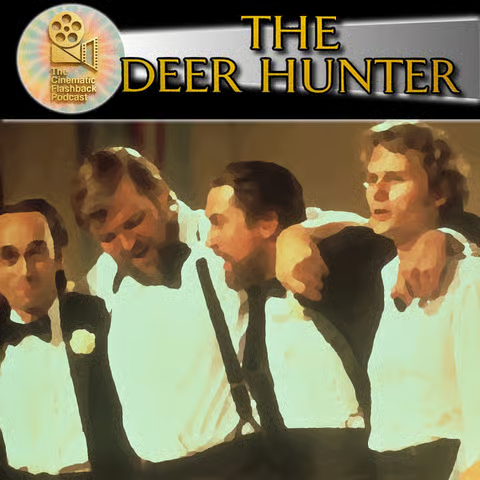
The film’s closing moments remain deliberately ambiguous. After Nick’s funeral, the surviving friends gather in the bar as John begins singing “God Bless America,” gradually joined by the others. Whether this moment reads as sincere patriotism, communal mourning, or quiet irony depends heavily on the viewer. The scene carries an intentional unease—both comforting and haunting at the same time.
So, does The Deer Hunter still groove?
The answer is yes—with some caveats. The film undeniably drags in places, depending on one’s tolerance for deliberate pacing. But the performances, emotional ambition, and sheer craftsmanship continue to carry enormous weight. It remains a cornerstone Vietnam film not because it shows the most combat, but because it captures the human cost with unusual intimacy.
Nearly five decades later, The Deer Hunter still hits its target—even if, like Michael’s hunting rule, it sometimes takes its time lining up the shot.

Chuck Bryan is a technology consultant, podcaster, and film enthusiast with a deep love for the bold storytelling and cultural shifts of 1970s cinema. As host of The Cinematic Flashback Podcast, Chuck explores the decade’s most iconic and overlooked films, digging into the artistry, impact, and behind-the-scenes stories that shaped an era. Off the mic, Chuck brings his passion for clarity and systems thinking to the world of software development and automation.

Klute (1971): Jane Fonda, Paranoia, and the Light in the Shadows